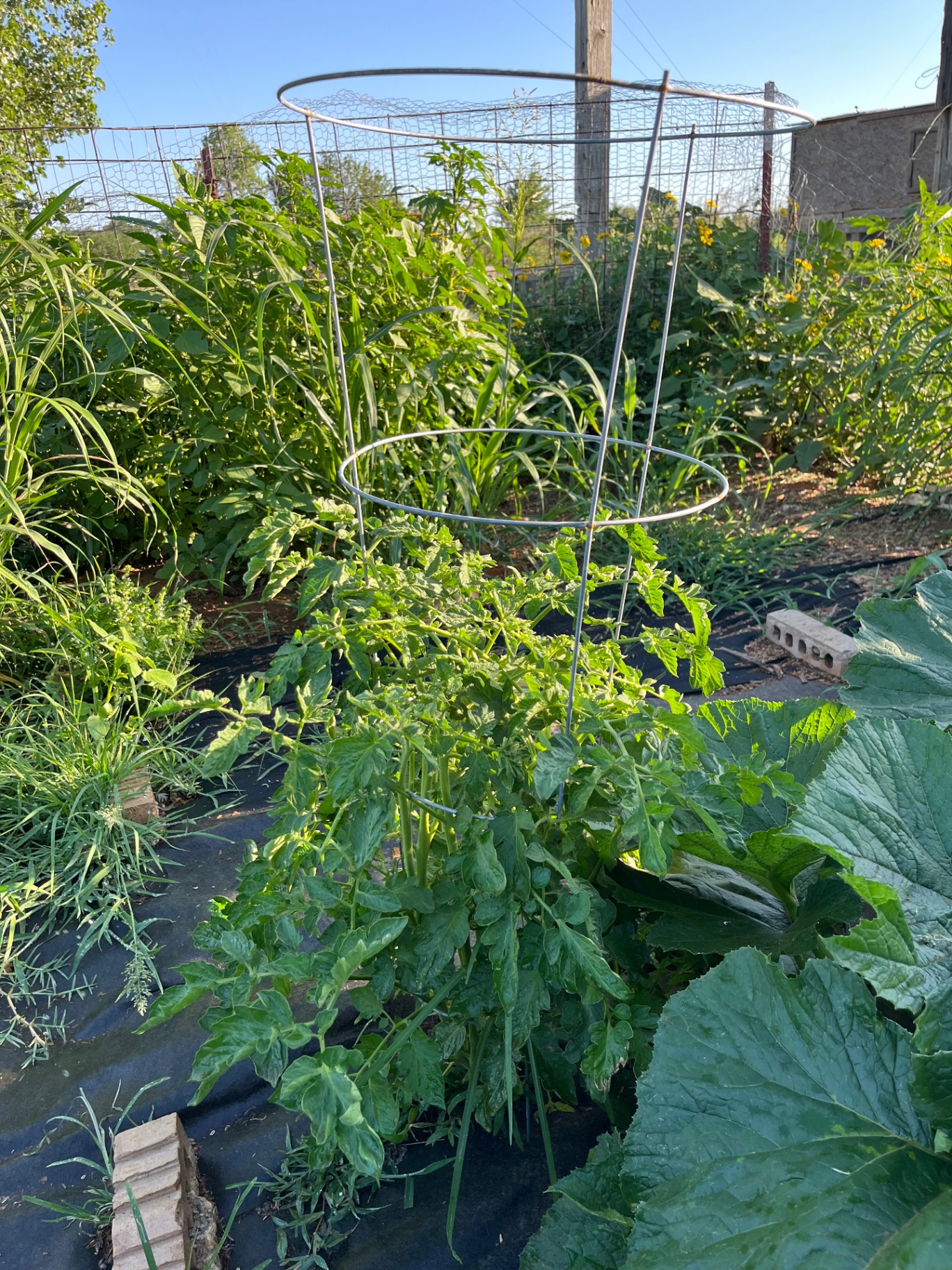
A tomato plant inside a tall round cage with a squash plant spilling out next to it, all on weed-suppressing landscape fabric.
Tomatoes climbing the cage — squash spilling out beside them
First green fruit forming. Heat-loving squash leaves taking over the bed beside.
Read this to your kid first
"Today's photo is the tomato bed. Notice the tall cage holding the tomato up and the giant squash leaves spilling out beside it. We're going to learn why the cage matters, why squash leaves are so huge, and you'll make a guess about which plant will end up biggest by August."
Field notes
Today the tomato plant has filled out the bottom of the cage and is reaching for the top ring. The first green fruit is forming on the lower trusses — still hard and pea-sized, but unmistakable.
Right next to it the squash plant has unrolled leaves the size of dinner plates. That's how we know summer is officially here: tomato vines pushing up, squash vines sprawling out.
The black sheet under everything is landscape fabric. It blocks weed seeds from getting light and keeps the soil underneath warm and damp — both things tomato roots love.
The learning
What's actually happening
Words to know
- Pollination
- When pollen moves from one flower to another so the plant can make seeds.
- Indeterminate
- A tomato that keeps growing taller and making fruit all season.
- Truss
- A branch of a tomato plant that holds a cluster of flowers and fruit.
- Landscape fabric
- A woven sheet laid on the soil to block weeds while still letting water through.
Your turn
Make your guesses
Enroll a kid to save guesses.
Count the green fruits you can spot on this tomato plant today. How many ripe tomatoes do you think we'll pick from it by the end of summer?
Hint: A healthy heirloom tomato plant usually makes 20–30 fruit.
Which plant in the photo will out-grow the other by August?
Why might it be smart to plant a tall plant (tomato) next to a sprawling plant (squash) in the same bed?